Your cart is empty
Discover our collection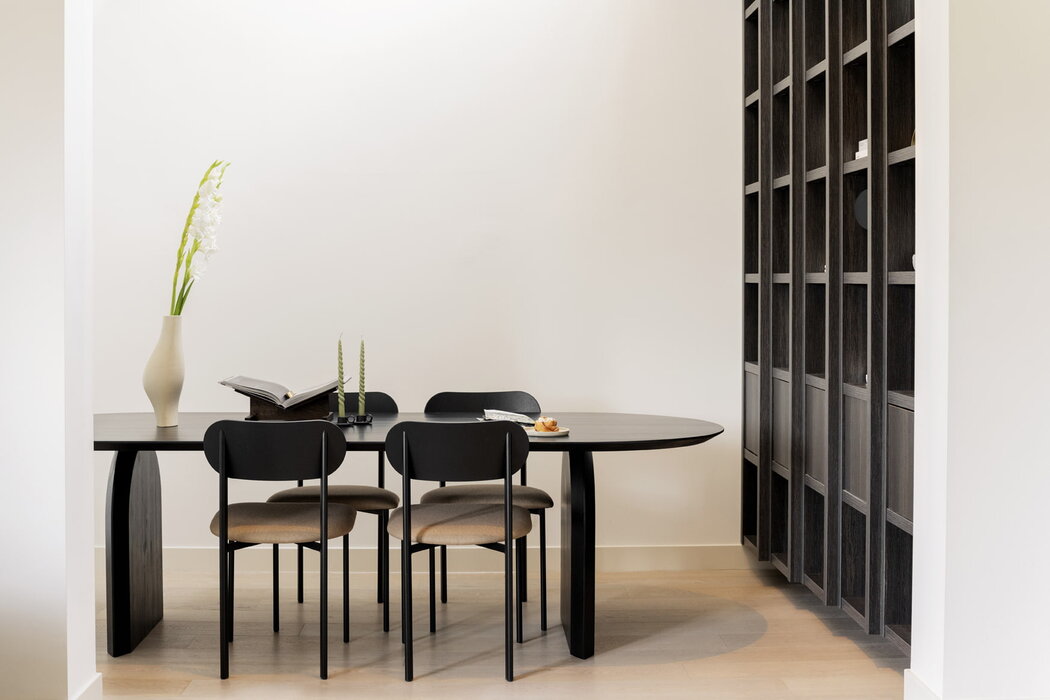
HENK at home with Naz Kawan
In the series 'HENK at home,' we visit people who inspire us to give you a glimpse into their daily home lives. This time, we visit Naz Kawan, founder and director of 2050 Factory (formerly A Beautiful Mess) and the Face Mask Factory. Her company, 2050 Factory, is a social enterprise where refugees can gain work experience in the textile industry and expand their professional network. They create sustainable, new products from existing materials.
Naz, you are an inspiration in sustainable entrepreneurship. What was your motivation to start 2050 Factory?
My biggest motivation to start 2050 Factory was because the fashion industry has too great a negative impact on the climate; that must and can be changed. With major challenges like this, it helps to look for local solutions. The Netherlands has a rich textile history; about 150 years ago, there were more than 200 workshops in Amsterdam alone where clothes were made. We relocated the industry to countries in the global south and, in doing so, lost the craftsmanship in the Netherlands. It has always been my dream to bring the textile industry back here.
In the final year of my studies, I conducted research into circular economic challenges in the fashion industry. During my research, I discovered that in the Netherlands, we have a large network of tailors with a refugee background. I believe that we can find solutions to major challenges if we learn to look at things differently. With my company, we combine the talents of tailors with making clothing production more sustainable and local.
You've had the opportunity to work with major brands like Tommy Hilfiger and Dutch eyewear brand Ace & Tate. What achievement are you most proud of?
What I am personally most proud of is that my company creates jobs for a target group that has difficult access to the labour market. It is special to see that people can start working from day one without being fluent in Dutch or going through lengthy processes and integration programs. I am also not in favour of the latter. The fastest way to include people in society is by looking at their talents and utilizing these talents. What I am most proud of business-wise is the Tommy Hilfiger Award we won in 2020. This also led to our collaboration with the brand, with which we have been able to make a real impact. Ultimately, you need the big players in the industry by your side to increase your impact and truly make a difference in sustainability. That's why I also believe that collaboration is the most important means to achieve the sustainability of the industry.
How does sustainability play a role in your daily life?
Since I started my company four years ago, I have started buying differently and looking much more critically at the companies I buy from. Unfortunately, the lack of transparency is still a big problem, not only in the clothing industry but also in other industries. Few companies can really tell you where, how, and by whom something is made. With my company, I am constantly working on how we can make the industry more sustainable, and it is an ongoing process that is constantly changing. It's not just systemic changes you're trying to bring about, but also a change in the culture we live in. For me, that starts with curiosity and a critical look at the products you buy. I question where and how everything is made.
How would you describe your interior style, and what do you pay attention to when buying a new piece of furniture?
I would describe my interior as minimalist with a small colour palette in natural tones and soft colours. I like clean lines and a few high-quality modern items without too many frills. To create more warmth, I like to use soft materials and warm lighting. A beautiful bookcase, for my collection of books, is also important to me. I like to let my furniture speak for itself, without too many distractions and with a few eye-catching works of art to truly make a house a home. I have a great love for modern art, but lately, I've also become a fan of Art Nouveau again; an art movement that strongly reverts to elements from nature.
Studio HENK collaborated with Renewi on a solution to give waste wood a second life, resulting in the 100% recycled Slot Dining Table. Why did you choose this table?
I chose the table because it has a minimalist yet modern and timeless design, and it is also entirely made from waste wood. The table is a good example to show that by developing a fully recycled product, you don't have to compromise on beautiful design. What appeals to me most is also how the table is made; for example, it is made locally in the Netherlands and came about through true craftsmanship. Collaborating with another company to create new things is also something I stand for in my business.
Are you also curious about our Slot Dining Table, which is 100% recycled in collaboration with Renewi? Visit one of our stores to view and order the table for your interior. The Studio HENK x Renewi Slot Dining table is available in two finishes: natural light and, as you can see here at Naz's home, in black stain.