Your cart is empty
Discover our collection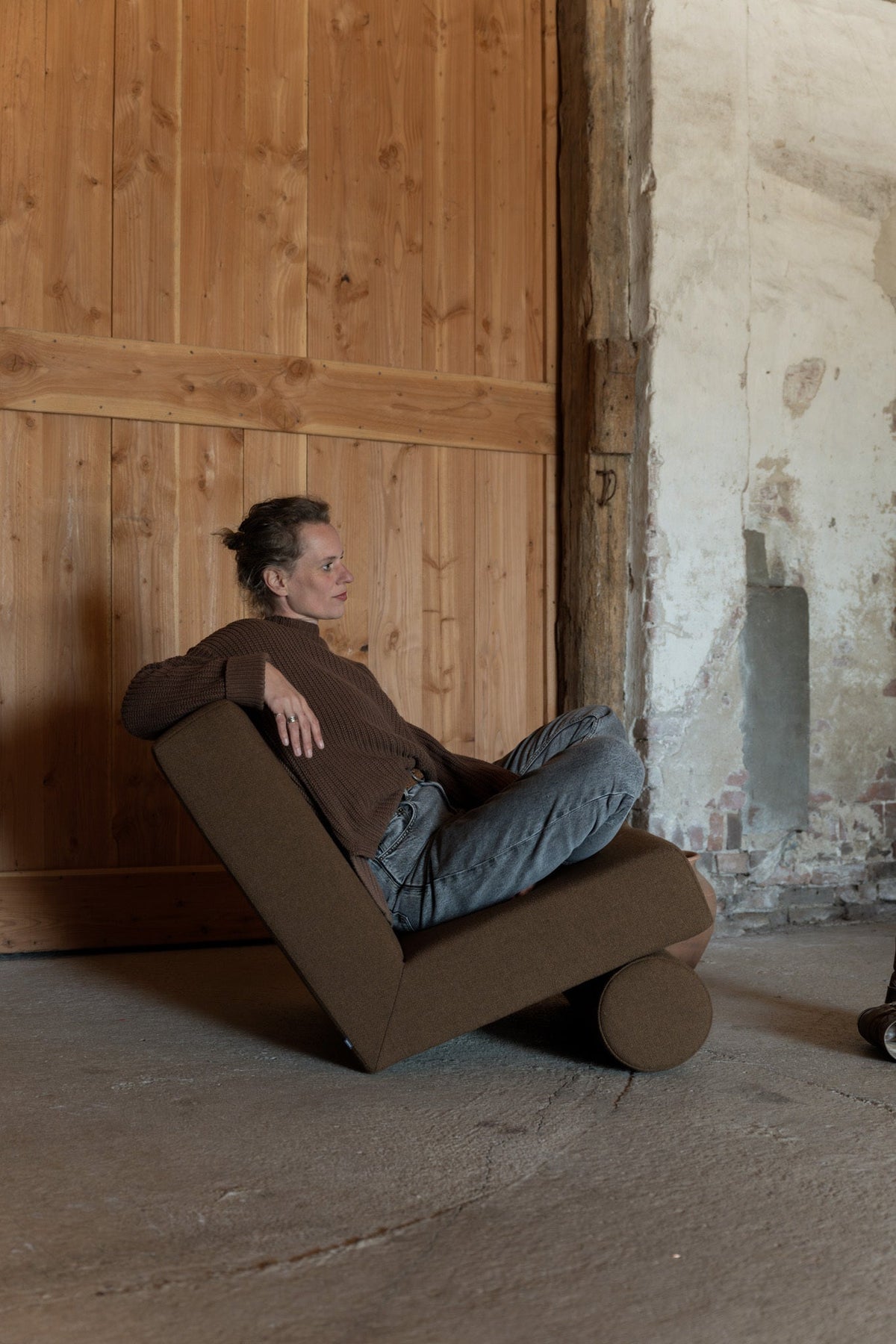
HENK Visits Halona
In the 'HENK Visits' series, we visit inspiring people to take a look into their daily lives at home. This time, we're in the lively studio of Babette Leertouwer, also known as Halona. Babette creates unique tapestries and artworks from Dutch sheep wool. She embraces the craft and the imperfections of the material and draws her inspiration from nature and farm life. We spoke to Babette about her work, her background, and how she connects with nature through her designs.
Who are you and what do you do?
Hi! I'm Babette Leertouwer. I make tapestries and artworks from wool, sourced from sheep shorn in the Netherlands.
Why did you start this work?
After studying textile art, I worked for several large companies. There, I noticed that much of the work involved materials from low-wage countries, made under conditions that raised questions for me.
I missed the direct contact with the material and its makers. Having grown up on a farm, I feel a strong connection to animals, farm life, and old craftsmanship. In the Netherlands, sheep wool is a residual product. I really wanted to work with it because I can see with my own eyes where it comes from.
How do you get inspired by your work? / How do you get inspired?
I let the material guide me. The wool is the starting point. I look at the texture and colours, and from there, the design emerges.
Wabi Sabi plays an important role in your work. What does this mean to you?
For me, Wabi Sabi is about imperfection. What I love about wool is that sometimes small remnants remain – like straw or bits of heather. I deliberately leave them in because they emphasize where the material comes from: nature. You literally see nature reflected in it.
What is the importance of old craftsmanship to you?
For me, old craftsmanship is important because it involves us in what we create. We not only know how something is made but also make it ourselves – instead of outsourcing it to a place far away. For me, craftsmanship is also a way to get out of my head and engage my body.
What do you hope people feel or experience when they see your work?
I hope people truly start to feel again. The wool is soft and warm – very different from the many plastic materials we surround ourselves with nowadays. I hope my work connects people with nature and with the local materials we have here.
You call yourself an activist. How do you emphasize this in your work?
I emphasize activism in my work by deliberately leaving the bits of straw and heather in the wool. I don't endlessly wash the wool to remove every trace of nature – as is often done with the clothing we wear.
My hope is that this will make people wonder: how 'dirty' is that piece of straw, really? For me, the activism lies in that choice: to show that local, unprocessed materials are valuable – perhaps precisely because of their imperfection.
What has shaped your way of working?
I was partly raised by my grandmother. She lived on a farm and lived according to old values. From her, I learned that you have to make do with what you have. That's why I love working with Dutch wool: you start with what's available, and from there, the design emerges. I don't think: let me add something else or order something and have it shipped from abroad. No, I work with what's here – with the wool from our own sheep – and I make do with that.
Do you also work with materials other than wool?
I love working with linen – also a beautiful natural product. The two materials go very well together; the linen enhances the quality of the wool.
You work a lot with earthy colours; is this a conscious choice?
Yes, earthy colours calm me and help me to ground myself. When people step in here, they often say: it's so serene and peaceful here. That's exactly what those colours do for me. In a world that often feels hectic, they bring me back to myself for a moment.
Why did you choose the Lean Lounge by Studio HENK?
I think the Lean Lounge goes beautifully with my tapestries. The deep brown colour of the chair comes into its own in my studio. I look forward to photographing my work with the chair in front of it.